
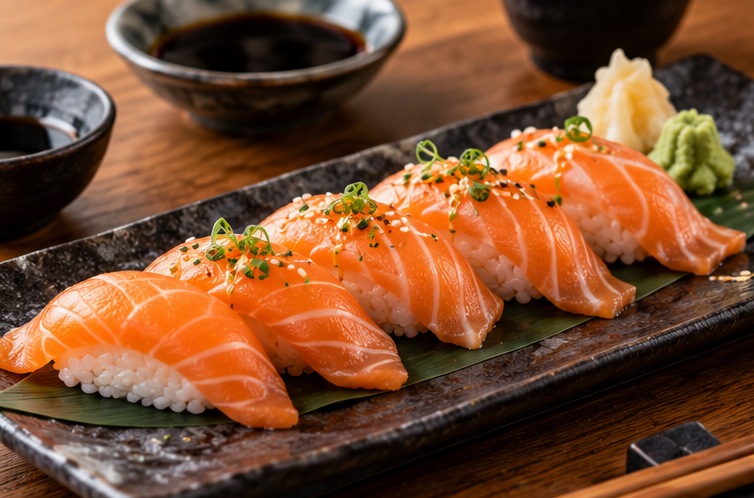
The menu is written at four in the morning, long before the room opens. What our chefs find at the market decides which rolls go on the board that night — and which ones quietly disappear until next week.
Firmness Before Appearance
A bright cut is easy to photograph and easy to fake. Our chefs press the flesh first: it should spring back without leaving a mark, and the sheen should look wet rather than glossy. Anything that fails that test goes back, however good the price.
That is also why the specials board changes so often. We would rather drop a dish for a week than serve a weaker version of it.
What our chefs check, in order
- Firmness of the flesh under light pressure
- Clarity of the eye and colour of the gills on whole fish
- Smell — clean and faintly of the sea, never sharp
- How the fillet behaves under the knife
Smaller Deliveries, More Often
Buying less and buying daily costs more than a weekly pallet, but nothing sits in a walk-in waiting its turn. By the time the dinner rush starts, most of what you will eat arrived that morning.
If we would not serve it to our own family on a Sunday, it does not go on the counter.
What It Means for Your Table
Ask your server what came in that day. The honest answer is often more interesting than the printed menu, and it is usually the thing the kitchen is most pleased about.
If you would like to watch it happen, book a seat at the counter.